Grinding


Grinding is a common industrial process used for shaping, smoothing, and finishing various materials. During grinding operations, abrasive wheels or belts are used to remove excess material, generating a significant amount of dust and particulate matter.
The type of dust generated during grinding can vary depending on the material being worked on. Metals, concrete, stone, or other substances can produce fine particulates that are potentially harmful if inhaled.
Exposure to grinding dust can pose serious health risks to workers if not properly controlled. The fine particles generated during grinding operations can become airborne and easily inhaled, leading to respiratory issues and other health concerns.
Inhaling grinding dust can cause respiratory irritation, coughing, and difficulty breathing. Prolonged exposure to grinding dust without proper protection and control measures can result in long-term health complications, such as chronic bronchitis, silicosis (in the case of crystalline silica exposure), or other respiratory disorders.
While specific NFPA regulations do not directly address grinding dust, it is important to consider applicable regulations and guidelines for worker safety and dust control. NFPA 654: Standard for the Prevention of Fire and Dust Explosions from the Manufacturing, Processing, and Handling of Combustible Particulate Solids provides guidance for managing combustible dust hazards in various industries, including those involving grinding operations. NFPA 484: Standard for Combustible Metals specifically applies when generating metal dust.
While certain types of dust may not seam combustible (ex. Steel and aluminum), they pose a serious risk. Compliance with NFPA 654, 484 and other relevant regulations, along with implementing industry best practices, is crucial to minimize fire hazards and ensure a safe working environment.
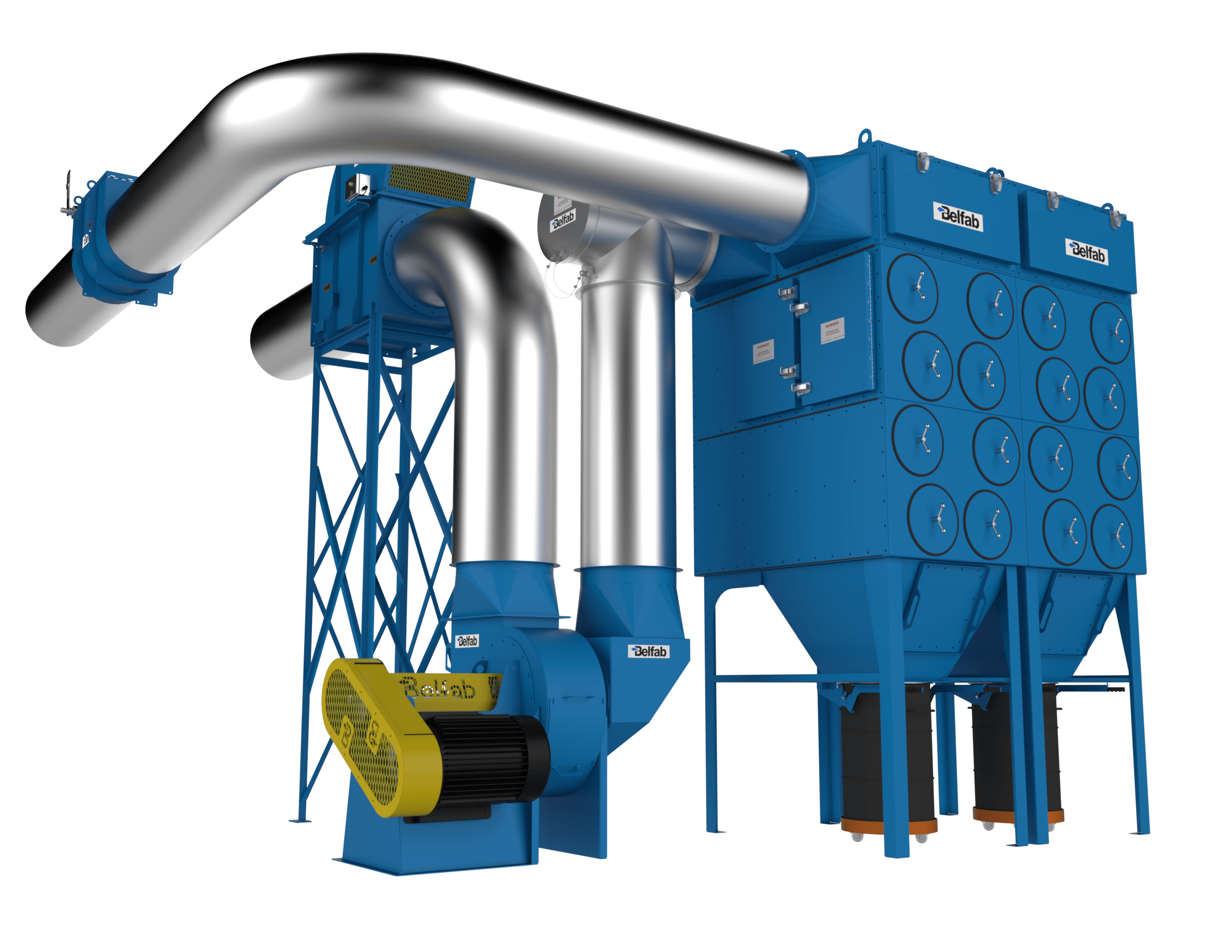
To effectively control and minimize grinding dust, Belfab offers advanced dust collection systems perfectly suited for grinding applications.
Our dust collectors utilize powerful suction and filtration technologies to capture and contain grinding dust at its source.
Implementing a Belfab dust collector in your grinding facility will help protect the health and safety of your workers, improve air quality, and reduce the risk of fire hazards associated with the accumulation of combustible dust.